

DUO, the Dutch Education Executive Agency, serves millions of students and schools. To improve its digital services, DUO actively invests in UX design and research. Not as an afterthought, but as a structural part of how they develop products. Two Humanoids UX professionals worked there for two years: Noor as a UX researcher and Lisa as a UX designer.
An organisation that takes UX seriously
DUO already has its own UX community, including a UX lead and a research lead. DUO also holds weekly recurring sessions such as research coffee meetings and design discussions. This kind of structure shows that UX is taken seriously at DUO and that its UX maturity is growing.
That growth also means maturity varies across teams. Some teams already work closely with designers and researchers. Others are still discovering what UX can mean for them. Both situations call for a different approach.
Bringing UX closer to the development team
Noor was placed as a UX researcher within a development team, something that rarely happens. This was exactly the kind of initiative DUO took to bring user research structurally closer to the work.
"That gave me a lot of freedom. There was a budget available, I could do almost anything I wanted, and I had such direct access to the designer in my team that my ideas were actually implemented.
She organised a co-creation session with six students in the city room of DUO's office, high above Groningen, a form of concept testing where students directly contributed to new solutions.
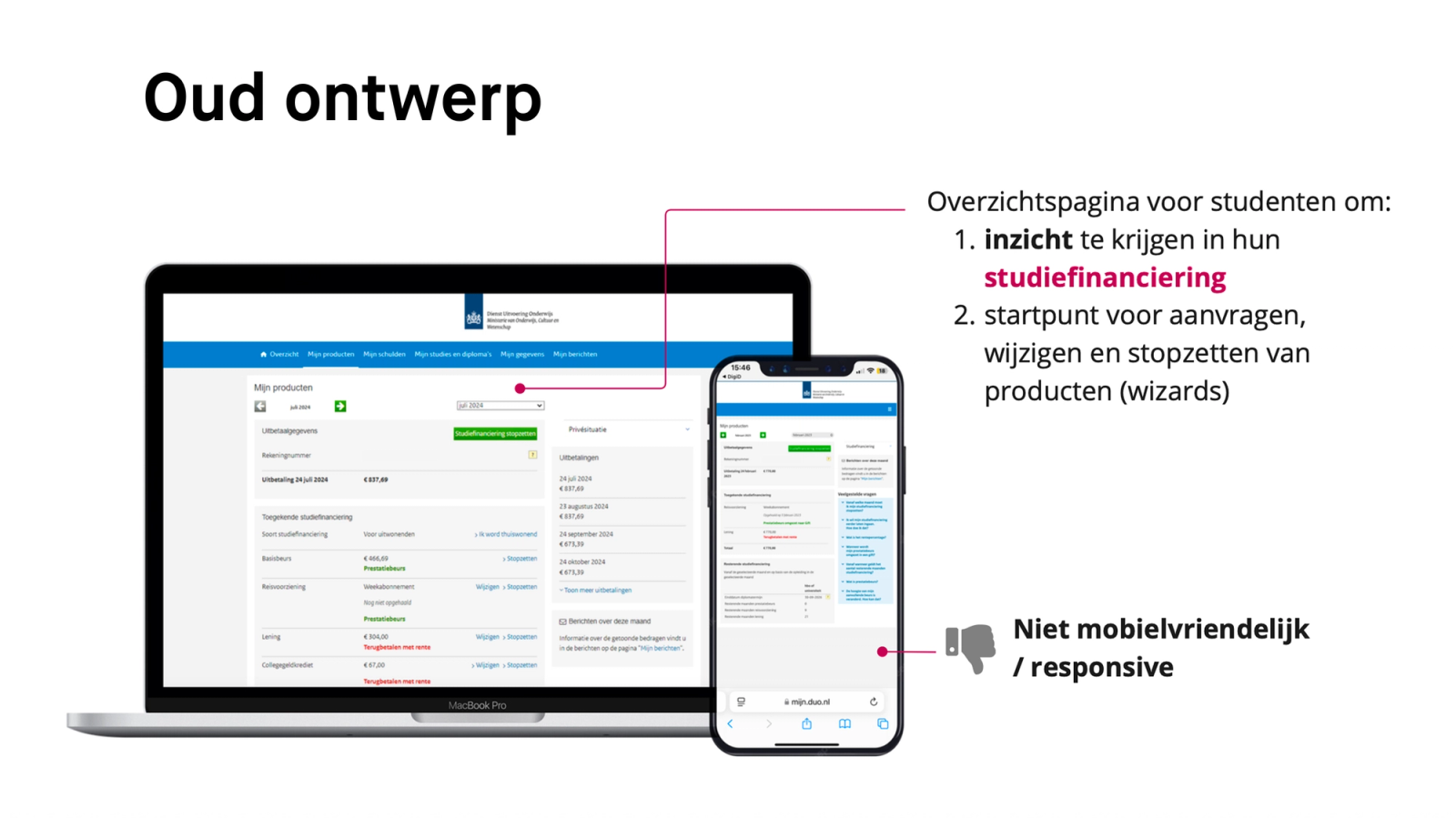
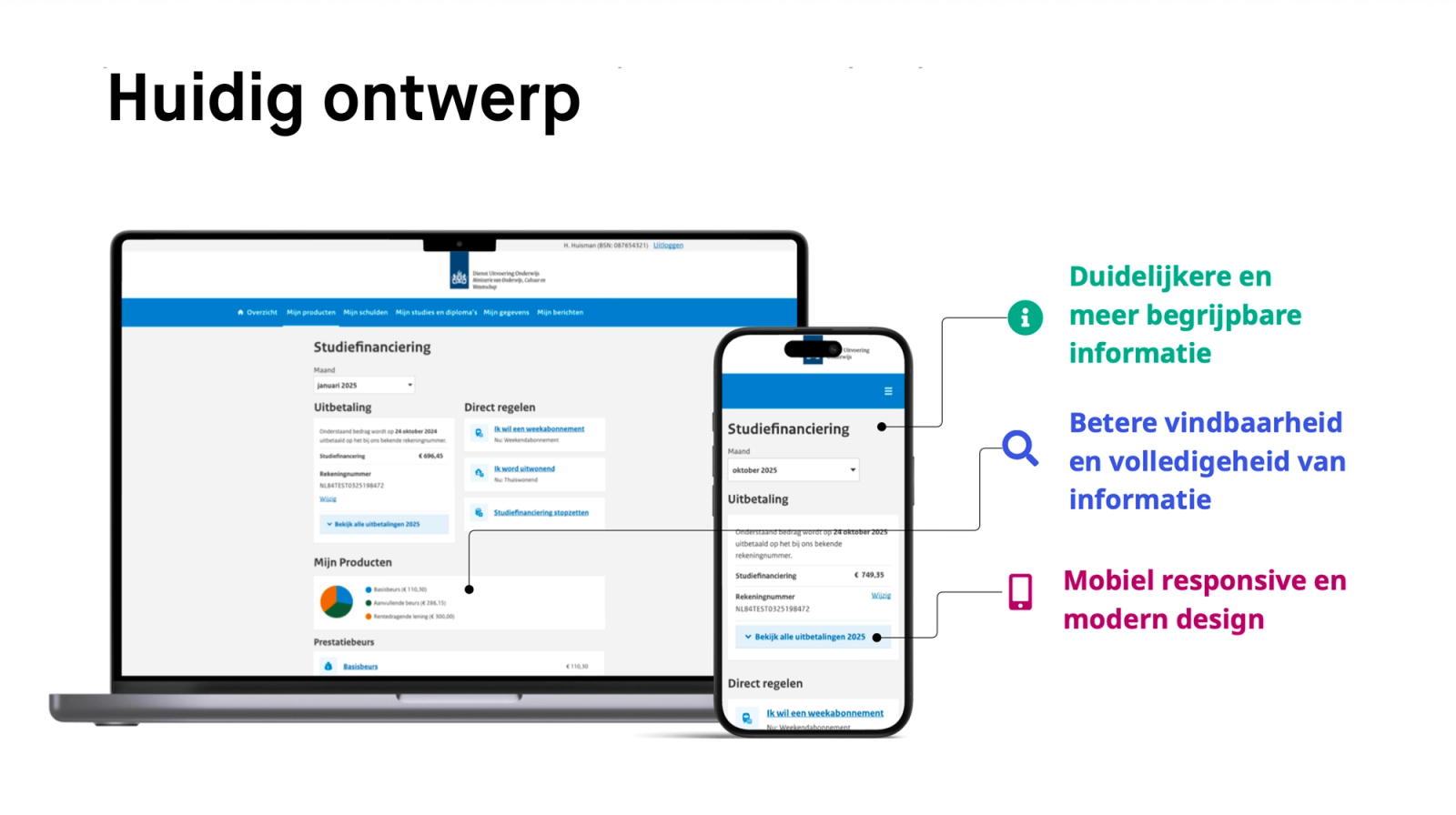
What happens when UX is properly embedded
Lisa started with DUO Onderwijsdata, a public website with data on schools and school locations.
"The team members saw us as real professionals. They listened carefully and found it interesting how we involved users." — Lisa
It shows how quickly the difference becomes apparent once UX is properly embedded in a team: less explaining, more impact. Lisa made extensive use of prototyping to test new solutions before they were built.
Putting the user first in a complex organisation
Large government organisations have their own language. Internal abbreviations, jargon, and processes that feel self-evident to employees but are completely unclear to the end user. That is exactly where good user research begins.
Noor conducted user interviews with students and deliberately used her fresh perspective as evidence for her work. She showed video clips of students struggling with the current situation. An effective way to make usability problems visible to the entire team. Then you see someone genuinely say, "I don't understand this." That works much better than just telling people.
She also found that her knowledge of platforms like TikTok and Instagram was an advantage when convincing colleagues. "Colleagues didn't use those platforms themselves, but the target group of students did. That was sometimes an eye-opener for them."
Lisa learned at DUO how to work with a design system. Not as a constraint, but as a starting point. "If I felt something was too limited by the design system, I could discuss that with the design system team." She also tested things that weren't yet in the system, to find out whether users would benefit from them.
What this delivers for clients like DUO
The collaboration shows what is possible when an organisation takes user experience seriously and creates the space to do it well. User research that directly feeds into the product. Designers who help teams grow in their UX maturity. A fresh perspective that is hard to organise internally but is crucial for truly putting the end user first.
The collaboration with DUO continues. Stefan is starting at DUO shortly to carry the UX work forward. Here you can read about how we support our colleagues who work with clients.
Wondering what Humanoids as a UX design agency can do for your organisation? Feel free to get in touch.
Photo: Ronald Tilleman