
AI That Actually Works for People
Many organizations feel the pressure to "do something with AI" but struggle with the question of what and how. At one of the Netherlands' largest health insurers, AI is already playing a concrete role: claims are processed faster, more easily, and more transparently, and customer service is becoming smarter and more personalized. The result: less waiting time, lower costs, and above all, more clarity for users.
👉 Discover how AI adds value to your organization with our AI Scan.
From Days of Waiting to Instant Insights
When people receive medical care abroad, they often get a paper receipt. Until now, that meant: submitting a photo through the app and waiting days for feedback. Foreign claims in particular were manually checked by external parties, resulting in high costs and long processing times.
"Our goal is to make that process smarter," says Hiske, UX Designer at the health insurer. "For users, that means faster clarity; for us, it means lower costs and less pressure on the organization."
AI Claims: The First Steps
The health insurer is using image recognition to improve this. The AI checks whether a photo is readable and recognizes if it's a foreign receipt. As soon as that's the case, the app automatically requests the necessary additional information.
The ambition goes further: in the future, the AI should be able to fully analyze documents, flag missing information, and provide immediate feedback – for example, whether care was provided by a general practitioner or a hospital, a detail that determines the deductible.
AI Assistant: From Phone Calls to Smart Help in the App
Not only are claims becoming smarter, customer service is also benefiting from AI. Thousands of customers call daily with questions about their bill or reimbursement. The team working on Gen A decided this had to change.
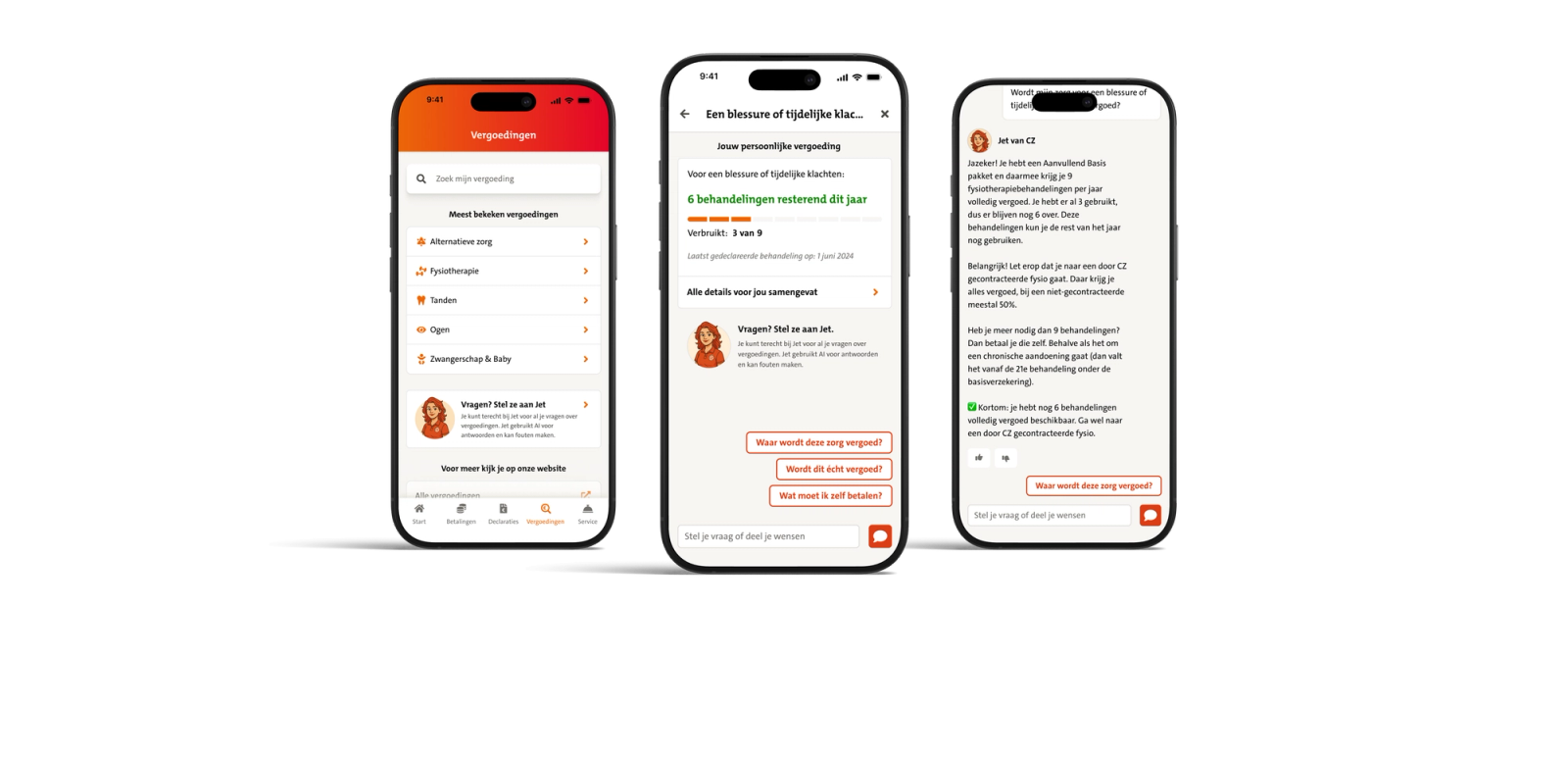
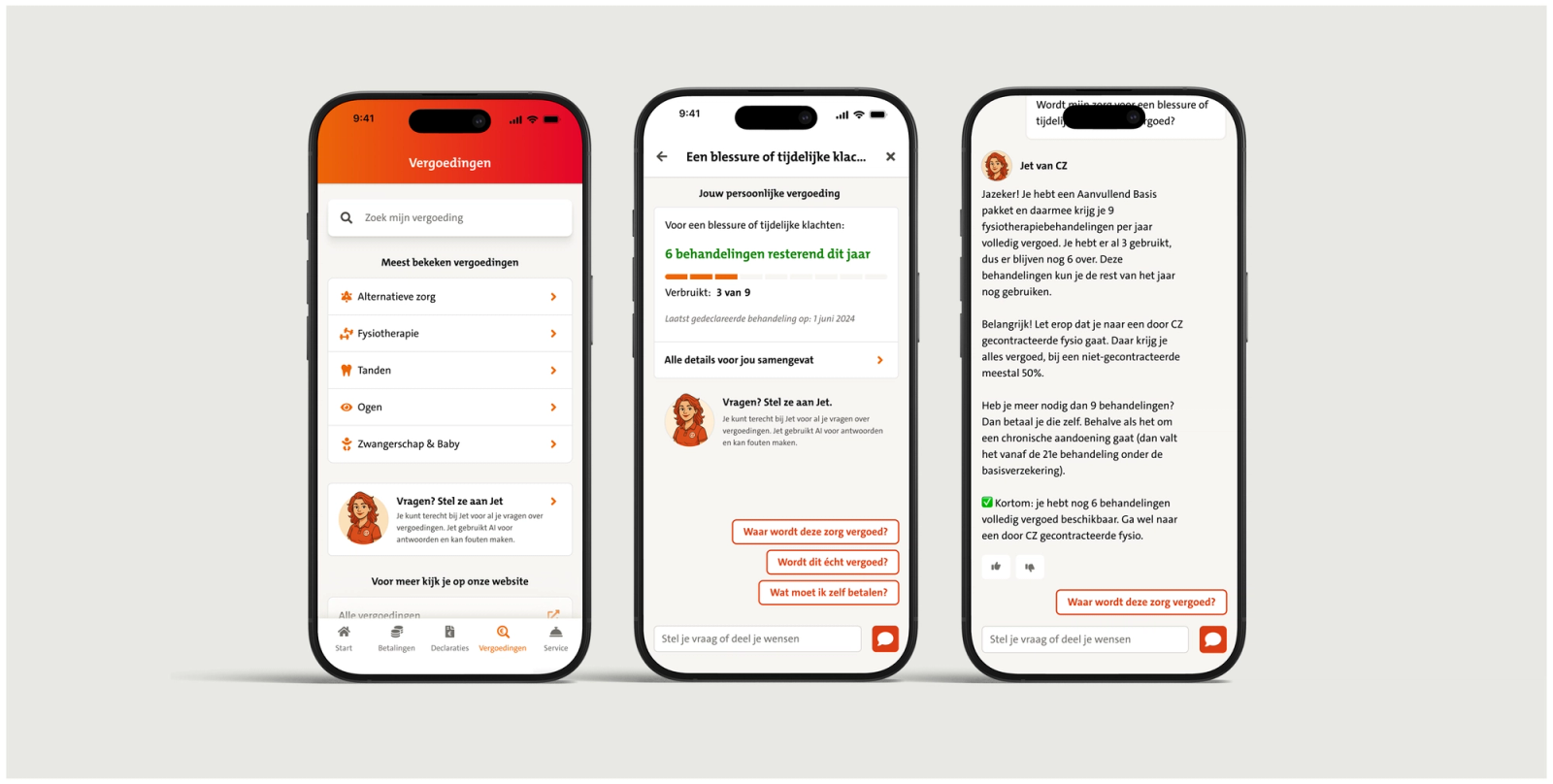
"All conversations are recorded and summarized by AI," says Maarten, UX Designer. "This way we know exactly what people keep calling about. We now use that knowledge to prepare answers in the app, tailored to someone's policy. This way, a customer gets immediate explanation the moment the question arises."
Future of AI in Healthcare: From Smart FAQ to Full-Fledged Assistant
The AI assistant isn't a talking chatbot, but functions as a smart FAQ that personalizes answers. For example, with a dental claim: instead of someone having to search themselves, the question "Why am I not fully reimbursed for this amount?" automatically appears, with an answer that fits the policy. For customers, this means faster help; for the health insurer, fewer repeat questions and a service department that has room for more complex cases.
The ambition for the coming period is significant. "Ultimately, we want the AI to not only give individual answers, but become a conversation partner," says Maarten. "Maybe the assistant will also help with navigation or personal advice in the future."
Transparency and Trust as Key
AI often raises distrust. That's exactly why the role of UX is crucial. In both claims and customer service, UX ensures transparency, control, and comprehensibility.
"The user often doesn't see the AI, because much happens in the background. That's why we always communicate what's happening: 'One moment, we're analyzing your receipt.'
Additionally, you must give the user choices. If the AI finds a photo unreadable, someone can still decide to continue. This prevents a 'computer says no' experience," explains Hiske.
This also applies to customer service. "Many bots still give generic answers that aren't helpful," says Maarten. "We specifically want to give answers that fit the personal situation. That makes it useful and credible."
Challenges and Lessons from AI Implementations
The development doesn't come without bumps. With claims, some documents are difficult to read, and in customer service, AI can still fall short in rare or complex situations. Compliance and reliability require careful checks, disclaimers, and often a human-in-the-loop.
An important lesson: without good data, AI doesn't work. "Many companies don't have their data in order," says Maarten. "If you don't measure what happens in your customer service or digital processes, you can't build good AI either. High-quality data is really a prerequisite."
What's learned here goes beyond just claims or customer service. Every organization deploying AI faces the same questions: how do you ensure users maintain trust? How do you prevent AI from becoming a black box? And most importantly: are you solving the right problem?
The message from Hiske and Maarten is clear: AI shouldn't be deployed as a hype, but as a solution that demonstrably improves processes. Whether it's claims, customer service, or internal systems, AI can make a difference, provided it's deployed properly.
Hiske adds: "In the future, the AI should be able to fully analyze documents, flag missing information, and provide immediate feedback."
Data, Technology, and UX: The Foundation for Valuable AI Services
What this project makes clear: AI alone isn't enough. Value only emerges when data, technology, and UX come together. AI can provide the knowledge and context, but UX ensures it becomes understandable, accessible, and trustworthy for the user.
As Maarten explains: "Ultimately, it's about giving the customer certainty at the right moment. That's where AI makes the difference."
Frequently Asked Questions About AI in Customer Service
How does AI help customer service?
By analyzing conversations and answering frequently asked questions directly in the app, customers get faster explanations and employees have more time for more complex cases.
How can AI speed up the claims process?
AI can automatically analyze documents, recognize missing information, and provide immediate feedback to the user. This means claims need to be checked manually less often and users get clarity faster.
Why is transparency so important with AI?
Because AI often runs invisibly in the background, you must actively inform users about what's happening. This prevents distrust and strengthens the sense of control.
What is the role of UX in AI projects?
UX designers ensure that AI becomes understandable, transparent, and user-friendly. They also ask the critical question of whether AI is the right solution for the problem.
Is this only relevant for health insurers?
No. The lessons apply to every sector. Whether it's customer service, financial processes, or internal systems: AI only really works when it solves the right problems and gains user trust.
Ready to Deploy AI Smartly?
Want to know where AI can add value in your organization?
👉 Download our free AI Scan and discover your biggest opportunities and risks within 10 minutes.