
Welcome to Talking Tuesday!
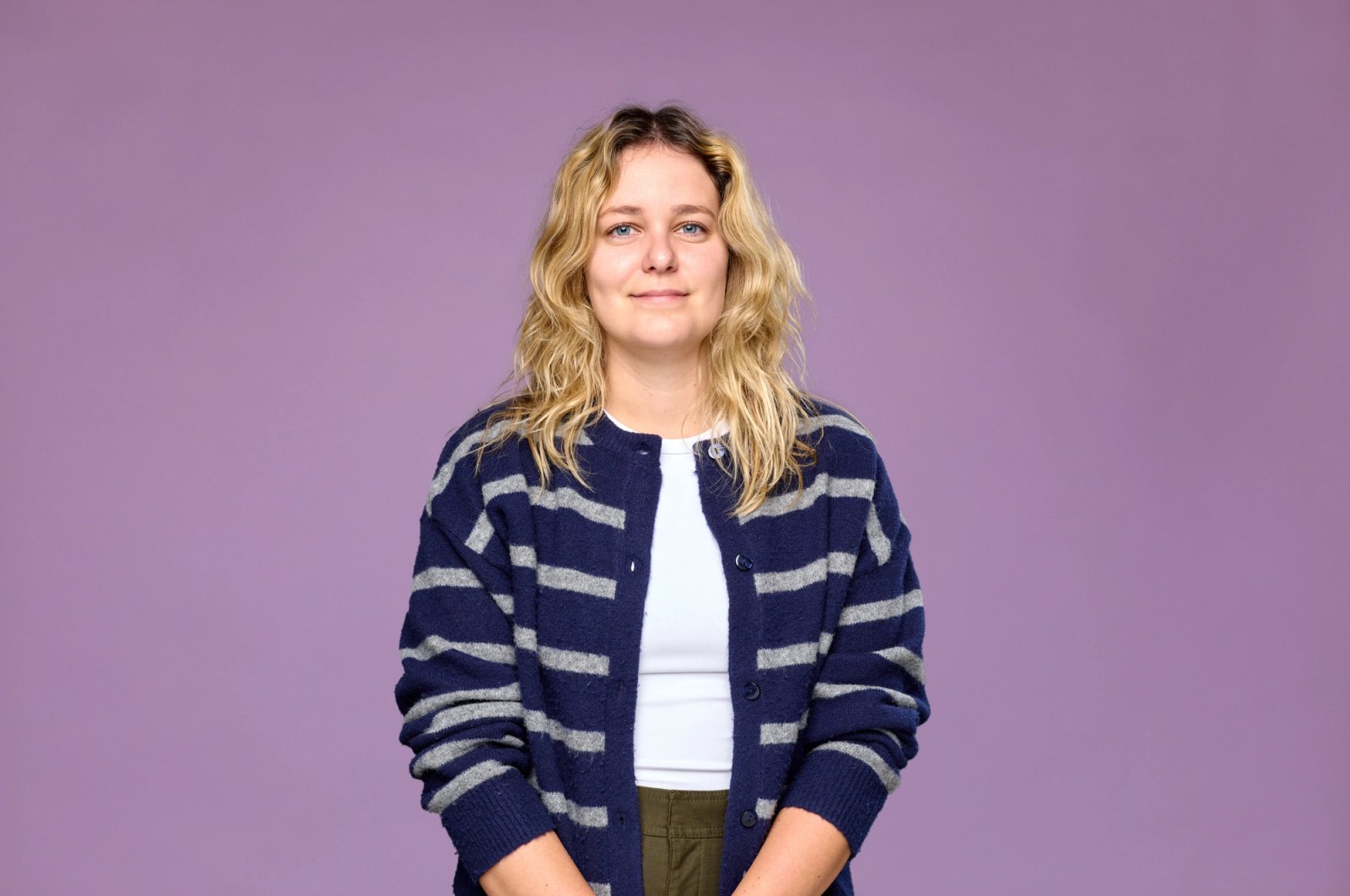
At Humanoids, we believe the best solutions start with asking the right questions. This week, we spoke with Noortje, one of our senior UX designers. In this Talking Tuesday, Noortje shares how she makes complex internal payment systems user-friendly for customer service employees, why asking ‘dumb’ questions in a large organisation is actually a smart move, and how she, as the only designer on her project, brings connection and creativity to a team!
This week with Noortje: Senior UX Designer
What are you currently working on?
I’ve been working on a project at ING for almost eight months now. My main focus is designing internal tools for payments, think monthly salary payments, which come with complex rules and constantly changing amounts. It’s a challenging project, but that’s precisely what makes it fun.
What do you find most interesting about it?
What I find most interesting is the complex environment. I’m designing for customer service employees. A group that often gets overlooked because people usually focus on the end user. Internal systems are frequently very outdated, as if you’re working on a twenty-year-old computer, even when the stakes are high, like with salaries. That’s precisely why I love being able to help that department and improve the overall UX experience.
What do you bring to a team?
I’m currently the only designer across two different teams. One DevOps team, and one for a customer service tool. I notice that my design expertise and vision contribute something that wouldn’t exist without a designer. I try to make the process a bit more creative, for example, by organising brainstorming sessions. I also make sure there’s a good atmosphere and a sense of connection in the team by keeping the conversation going. Work should be enjoyable too!
What tip would you give to someone just starting out?
I have three important tips for UX’ers starting out, tips I wish I’d had myself:
• Socialise early and often: in the first few weeks, go for coffee with as many people as possible to get to know them and find out where you can help. I didn’t do enough of that myself at the start; I was still sitting on the fence. But once you ask the right questions, you quickly find out who you need and where to go.
• Do the online courses: at some positions there are online courses available where you can learn an enormous amount. Banks like ING have these, for example. Make sure you actually set aside time for the mandatory ones. I was working on ‘SEPA direct debit’ and only found out three months in that there was a useful course that would have helped me from day one, which I only discovered through a conversation with a colleague. Which brings me back to tip one.
• Ask the ‘dumb’ questions: ask straight away what the abbreviations mean and write them down. Otherwise, meetings become genuinely overwhelming, because you’re only following half of what’s being said. Everyone has had a first day, don’t be afraid to ask when something isn’t clear.
What’s your favourite tool or design hack that you can’t live without?
I constantly try to structure my Figma file properly from the very start. I often create a separate page that acts as a table of contents. Stakeholders usually don’t work in Figma, so this way I can still guide them to the right screens easily. I also always build a prototype when I’m presenting. Stakeholders sometimes struggle to read through a loose design, but with a prototype, it feels like you’re already showing them a real product.
Can you tell us about your growth as a specialist over the past few years?
I started out as a visual designer at a company where UX was, in my opinion, a bit of an afterthought. I quickly realised that a good UI can’t exist without good UX. After that I started working through secondment at large companies. Having worked across so many different organisations, with diverse teams and varying levels of ‘UX maturity’, I’ve learned a great deal in a short space of time and grown hugely as a specialist.
What was your biggest challenge in a project and how did you overcome it?
My biggest challenge was being the only designer on my project at ING, and that can feel quite lonely. I overcame it by actively taking the initiative and seeking out other designers within the organization to bounce ideas off of. It also helps enormously to go into the office a lot at the start, so you’re visible and can build connections with colleagues more easily.
What do you love about this industry?
The industry is incredibly broad, and I love the range of possibilities. What I specifically enjoy about ING is the global scope. We’re not just working for the Netherlands; we work for countries like Belgium and Italy too. It’s fascinating to have to account for different languages, terminology and cultures within my flows.
How do you see the future of your role?
I see AI as a tool, not a threat. We’re increasingly going to be designing AI tools and AI assistants ourselves, and as designers it’ll be our job to make sure the interaction still feels human. Beyond that, I think the boundaries between designers and developers will continue to blur and may eventually merge into a single role. Creative prompt writing, for example, will become more and more important.
What kind of project or organisation would you love to work with in the future?
I’d love to work for Adidas; I think it’s a great brand that serves a wide range of audiences and does really interesting fashion collaborations. But I’m also very drawn to the social impact space, or something in green energy. My original motivation for going into this field was to use my work to help people.
What are you most proud of since joining Humanoids?
I am most proud of my project for Nationale-Nederlanden. I had only just started at Humanoids when I was given the lead on a large-scale design sprint about AI with a huge number of stakeholders. I ended up presenting to a full room with a microphone. That was quite nerve-wracking for my first month, but the reactions were so positive and the collaboration was really enjoyable.
What makes Humanoids special?
What I love is seeing how closely involved and intrinsically motivated everyone is to make Humanoids better, one step at a time. The level of expertise here is really high; knowledge and skills that took me seven years to build, people here pick up in half the time. And on top of that, the atmosphere is genuinely great. Everyone is curious about each other’s projects, and if you walk past someone’s desk, there’s always a conversation happening.
Noortje’s story shows that as the only designer in a team, you can still make a huge difference, as long as you keep asking the right questions and aren’t afraid to reach out. Curious about what that approach could mean for your project? Check out our LinkedIn for more content and tips from our experts!