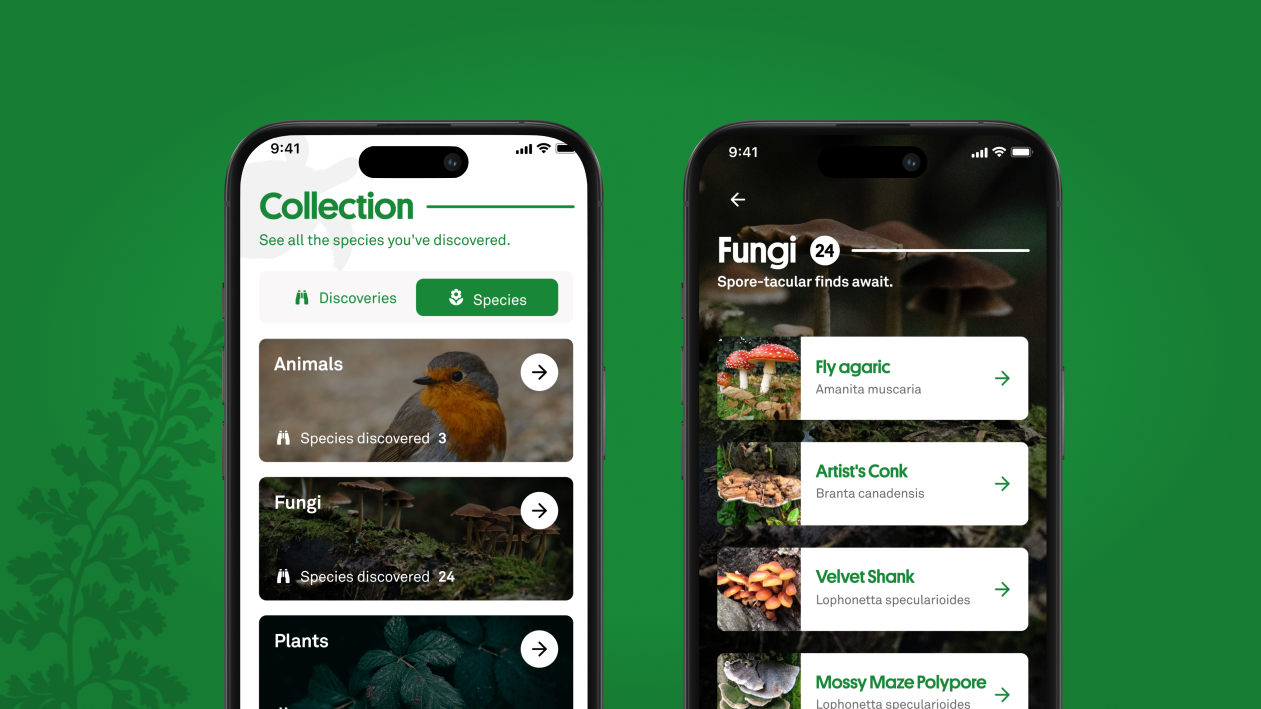
Bringing nature within reach: identify plants, animals and fungi with the ‘Wazzat’ app.
Together with Naturalis Biodiversity Center, we developed Wazzat: an app that lets you explore nature in a playful and intuitive way. Simply take a photo of a plant, animal or fungus and instantly discover which species it is. The app uses AI-powered image recognition for automatic species identification and is connected to the Naturalis API.
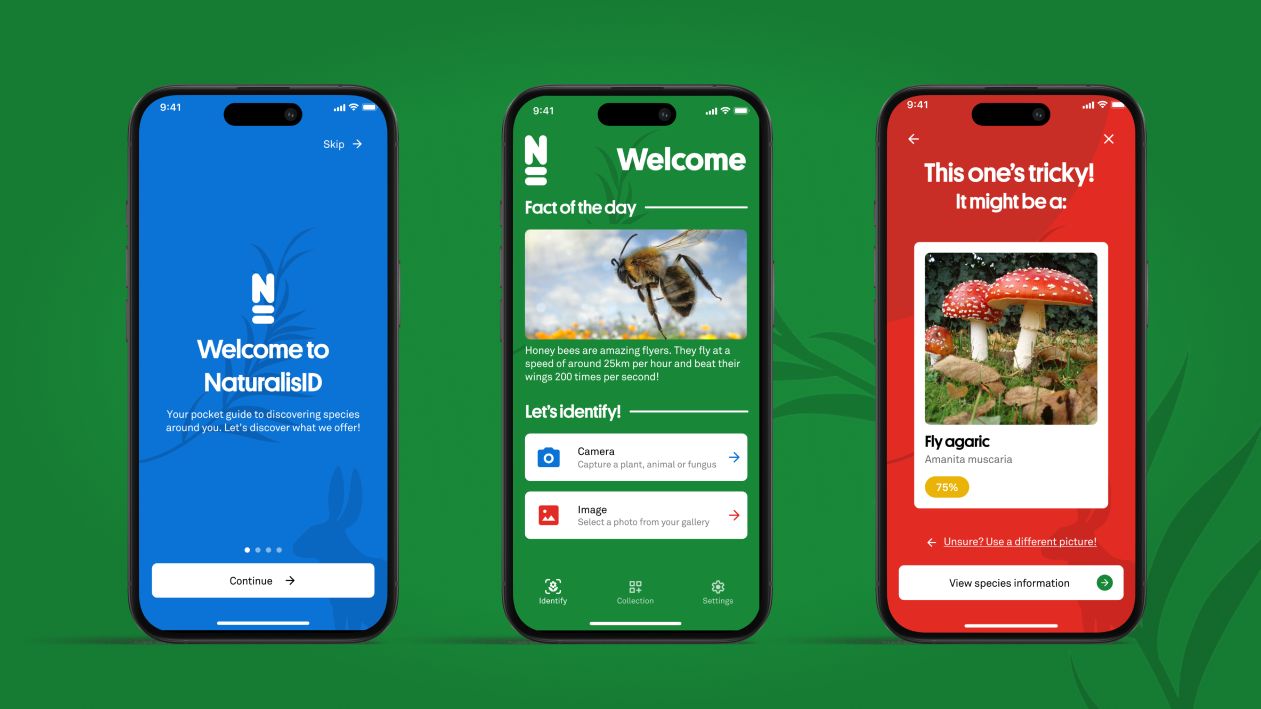
The solution: striking the perfect balance between educational value and ease of use
We developed an accessible app that brings the Naturalis brand to life. By making thoughtful use of space, navigation and interactive elements, we ensured that users can effortlessly find their way and complete tasks quickly wherever they are.
The app: discovering nature in a playful way
Users can take a photo of any plant, animal or fungus and instantly see which species it is. The information page then dives deeper into the discovery, functioning like a mini-Wikipedia inside the app. All identified species are automatically organised and saved in collections. In addition, a new nature fact appears every day, offering a simple and engaging way to learn more about the natural world.
The challenge: translating the Naturalis API into an intuitive and understandable user experience.
Naturalis is a frontrunner in automatic species recognition and aims to increase awareness of biodiversity, both inside and outside the museum. The app needed to be intuitive and fun, enabling everyone from curious children to dedicated nature enthusiasts, to explore the natural world.
The process: from user research to development
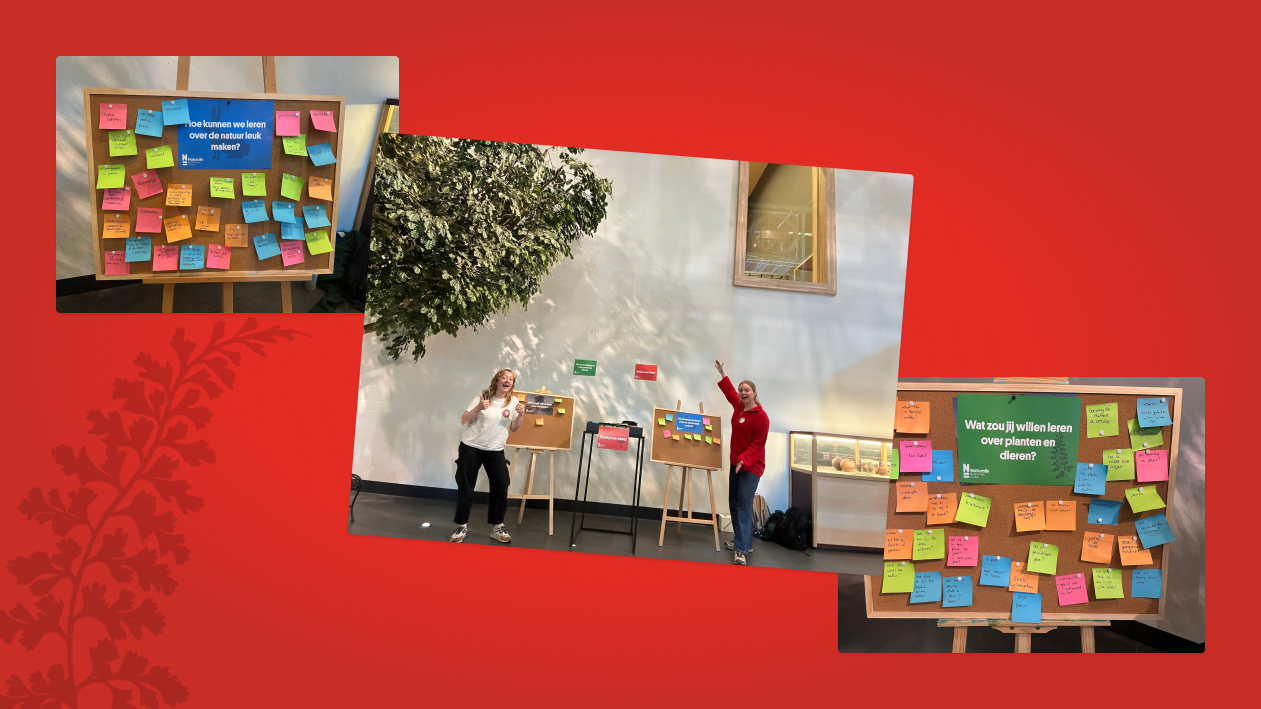
To uncover user needs and define the direction of the app, we conducted extensive user research. We explored the landscape and spoke with both stakeholders and museum visitors. By understanding what visitors want to learn about nature and how they prefer to engage with it, we were able to validate ideas and refine key features. Through workshops, prototyping and iterative testing, we shaped a clear MVP concept. In addition to UX/UI design, we also took on the development. The app was built with Expo (React Native), allowing us to serve both Android and iOS with a single codebase.
The technology: translating the Naturalis API
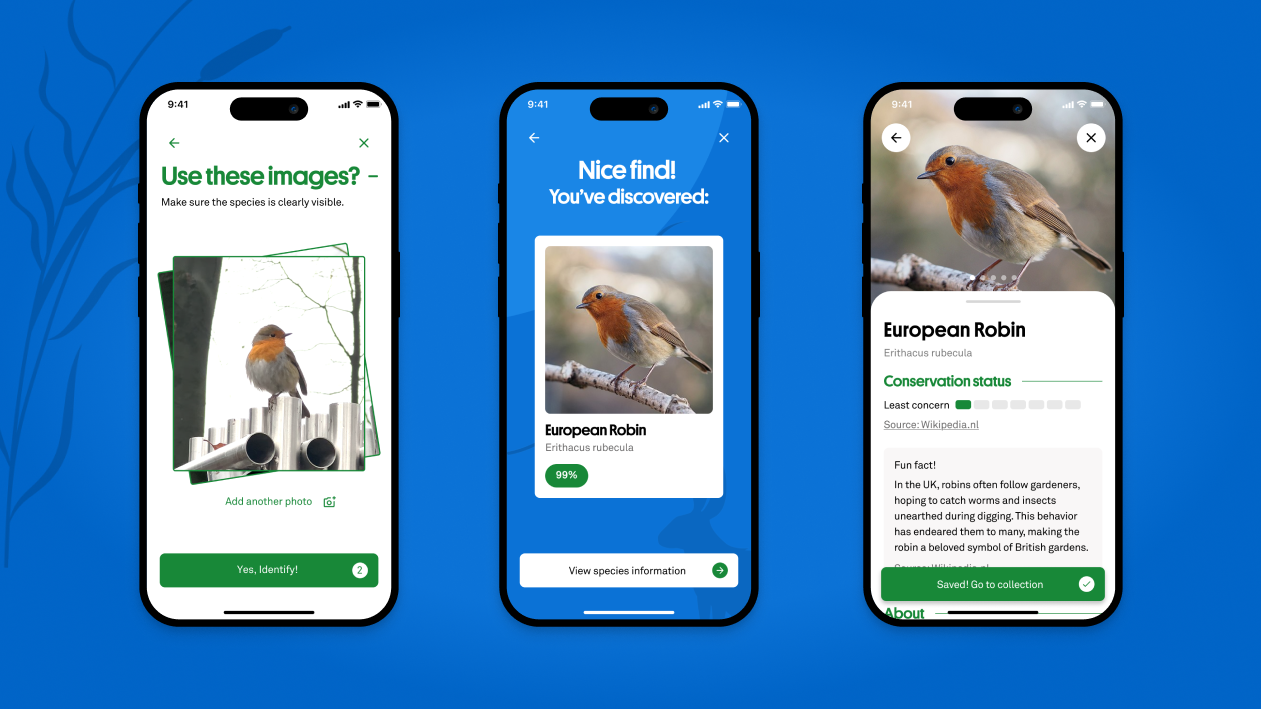
Species recognition is powered by the Naturalis API, a digital interface that allows our app to communicate directly with Naturalis systems. Naturalis developed an AI model that identifies European species based on photos. When a user takes or uploads a picture, we send it to the Naturalis API, which analyses the image and returns a species along with a confidence score.
The API provides, among other things, the Latin name of the species. In the app, we use this name to retrieve additional information from Wikipedia. This content is automatically displayed in Dutch or English, depending on the user’s language settings. We chose Wikipedia because it is free, stable and independent. The app then presents a short description and an image of the species.
We also developed a lightweight algorithm that determines whether the find is an animal, plant or fungus. To do this, we parse the full HTML of the Wikipedia page and look for specific keywords associated with each category.
All user discoveries are stored locally via a small on-device database, ensuring that collections remain accessible even when offline. When switching to a new device, the data can easily be transferred.
Download the app!
The app is now live and available for free in both the App Store and Google Play.