
Welcome to Talking Tuesday!
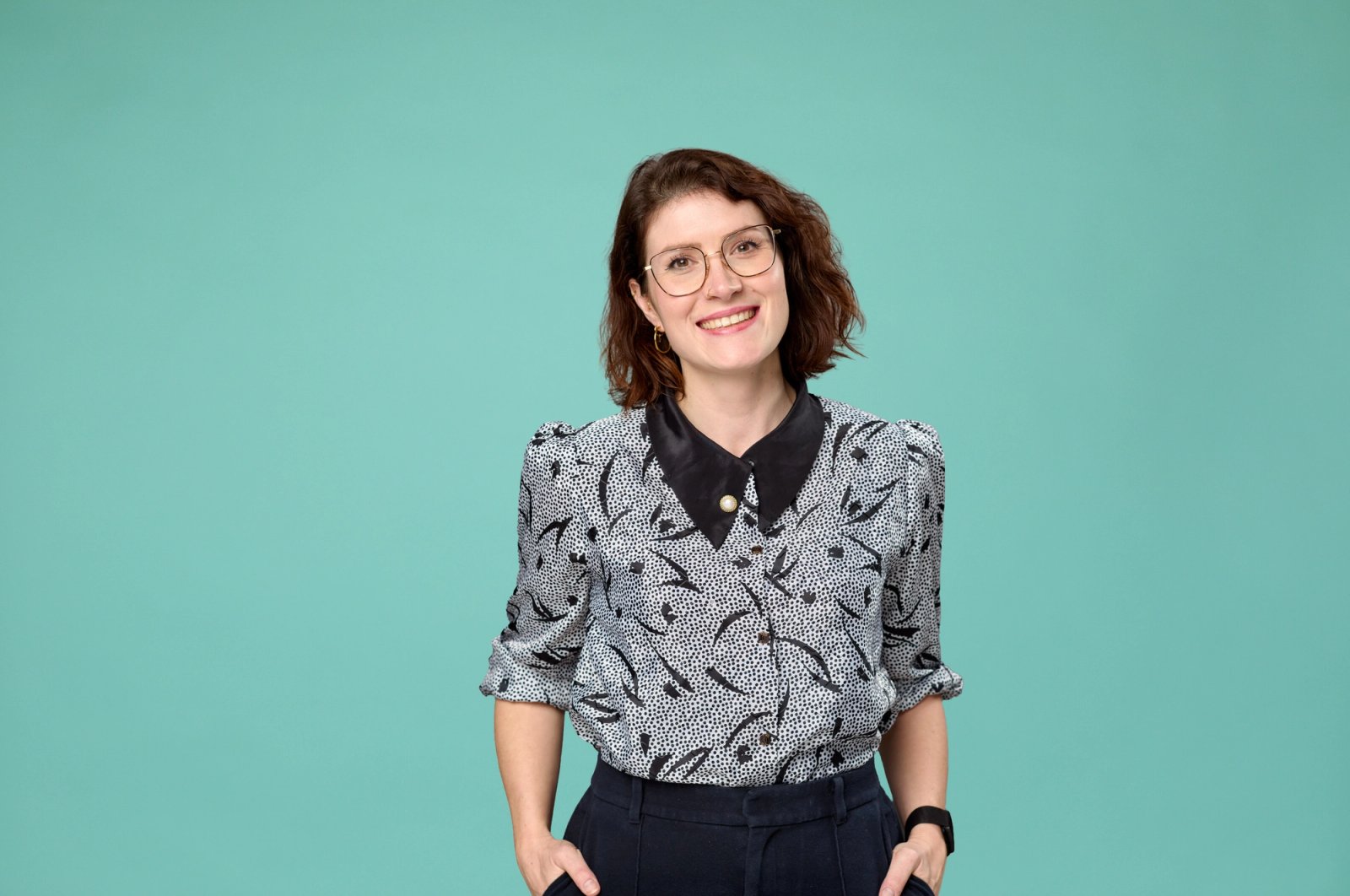
At Humanoids, we believe the best solutions start with asking the right questions. This week, we spoke with Martine, our service designer. You're about to read how she makes complex government information accessible to everyone, why assumptions within a team can be dangerous, and how she makes a difference as a connector between policy, technology and the user.
This week with Martine: Service Designer
What project are you working on right now?
I've been working at the Ministry of the Interior for a while now. I spent quite a long time at KOOP (Knowledge and Exploitation Centre for Official Government Publications), where we mainly focus on publishing government documents. The starting point of the Open Government Act is that we provide transparency and that documents are available to everyone. About a month and a half ago I started a new project: MijnOverheid Zakelijk. This is a portal for entrepreneurs where they can manage all their government affairs in one place. Since the platform isn't live yet, we're in an exploratory phase where we're building a strong foundation step by step. We're investigating what's needed to make the concept not only feasible, but truly valuable for the user. In doing so, we're constantly looking for the right balance between what entrepreneurs need and what's technically possible.
What do you find most interesting about it?
What made my work at KOOP interesting but also challenging was the broad target audience. You're dealing with citizens with a very diverse base of knowledge, information needs, and motivation to look up government information. For me, the challenge lies mainly in the translation: how do you make often complex and abstract government information accessible and practical, so that everyone can participate in society? It's precisely that pursuit of transparency and actually reaching a wide group of users that makes the work not just interesting, but meaningful too!
I'm taking that experience with me into my work on MijnOverheid Zakelijk. Entrepreneurs are, after all, also citizens. Those who often already have some experience with the government, but in a different context and with different needs. That makes it extra interesting to explore how we can translate existing insights into an environment that better fits their specific situation.
What do you bring to a team?
I contribute by looking at how we can create a smooth and effective flow from A to Z, both in the process and in the collaboration. What I often notice is how much work is done based on assumptions. That's why I deliberately ask questions that might not seem obvious at first, to test whether those assumptions actually hold up. I like to broaden the scope of a problem. Rather than just looking at how to improve a search function, for example, I'd sooner ask: how can we remove the uncertainty that people experience? That's where the real impact lies, for me. As a designer, I take on a connecting role in that. I act as a facilitator who brings together different perspectives, from policy and business to the user, and helps turn that into one coherent whole. At the same time, I'm relationship-oriented: I believe that good collaboration starts with a genuine interest in each other. I hope to be an optimistic and upbeat addition to the team, someone who brings energy and connects people.
What tip would you give to someone just starting out?
Above all, dare to ask lots of questions. That wasn't always easy for me at first. I quickly assumed I was asking a stupid question, but apparently those don't exist. You're here to represent the user, and the user doesn't always know everything. Sometimes you ask a question and a product owner or analyst responds with: "Huh, we've actually never looked at it that way. Why do we do things the way we do?" By simply asking a question, you can act as a kind of critic and set a lot in motion.
What's your favourite tool or design hack you can't live without?
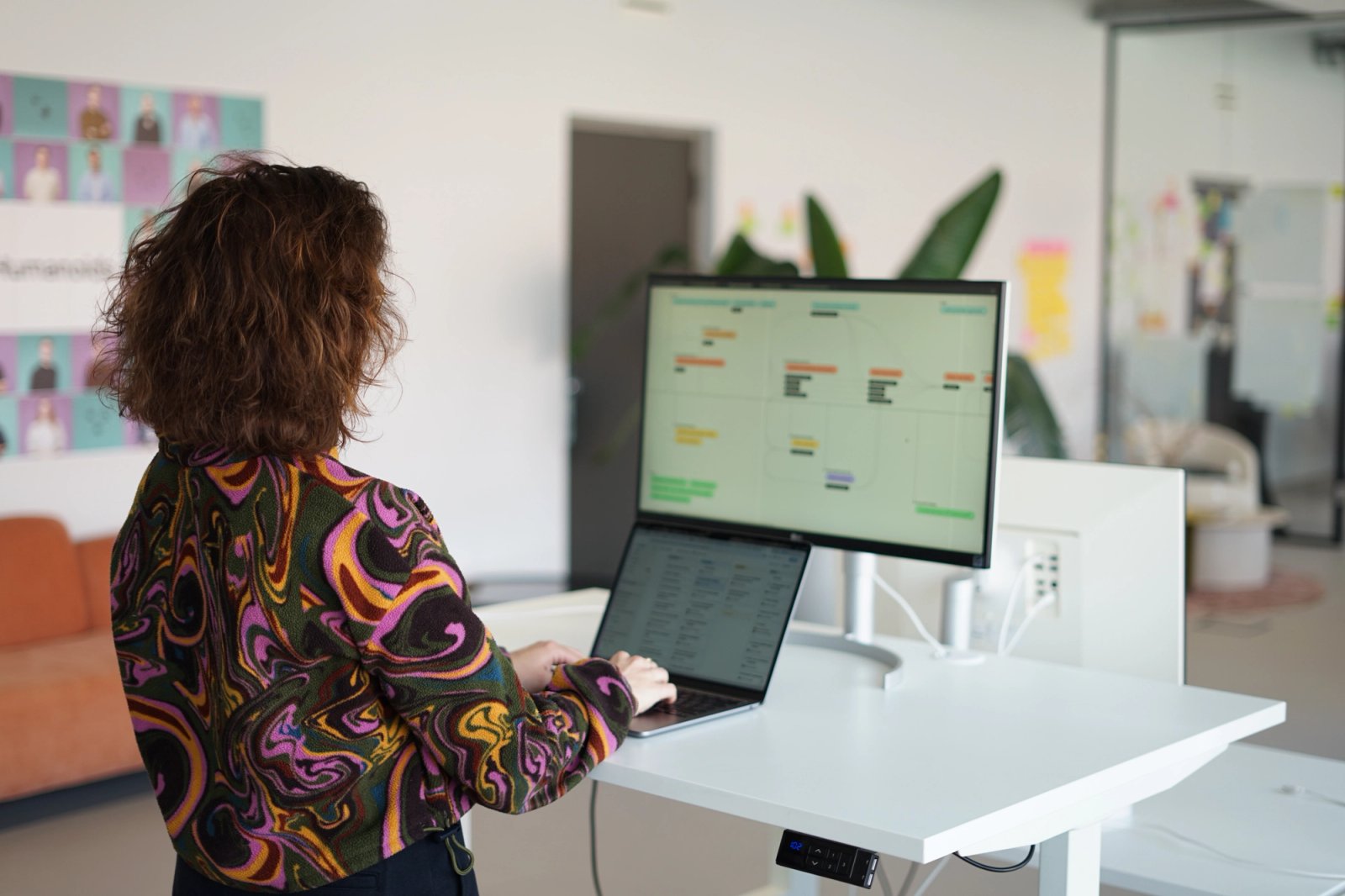
I'm definitely a fan of making problems visual, for example, with flow tools like FigJam or Miro. These help make connections visible. By mapping out processes visually, people can see at a glance how everything relates to each other and where potential bottlenecks are.
At the same time, my most important design hack is actually about stepping away from digital tools. By literally walking away from your laptop and filling a wall with sticky notes together, the work suddenly becomes much more tangible. In co-creation sessions, you notice that everyone is more engaged, more focus emerges, and assumptions are voiced and validated much faster. That prevents miscommunication and leads to better, collectively supported insights.
Can you tell us about your growth as a specialist over the past few years?
I'd been working with interfaces and copywriting for quite some time, but it wasn't until COVID happened that I realised what I was doing actually fell under UX design. At first, my focus was mainly on improving the UI. Since joining Humanoids, I've continued to develop as a service designer. I've started looking much more at the full context in which a product or service functions, and have dived into systems thinking. As a result, my role is also shifting more and more towards that of a connector: someone who brings technology, policy, and users together and ensures those worlds truly understand and reinforce each other.
What was your biggest challenge in a project and how did you overcome it?
What keeps standing out to me in projects is how limited the available user information can be, and how much product teams end up working from assumptions as a result. This sometimes leads to solutions being developed that don't properly align with actual user needs. My approach is to embed user-centred working more structurally within the team, not as a standalone step, but as something woven throughout the entire process. I actively try to open up the conversation and bring decisions closer to the user, though this remains a challenge. I do this by integrating user research into different phases of the build process. I also make sure that insights don't gather dust on a shelf, but are actively shared and discussed within and beyond the team. By looking at user data together and translating it into concrete decisions, you build more support and assumptions get validated or adjusted more quickly. That way, we work step by step towards solutions that genuinely add value for the user.
What do you love most about this sector?
I'm driven by the impact you can make. Ultimately, everything hinges on a user who can find their way and feels understood. Working in government also means contributing to major societal challenges, which makes the work extra meaningful. Take someone who is semi-literate and struggles to understand government messages. If you can help make that information accessible and comprehensible so that the person doesn't get stuck but is actually guided through the process, you prevent a whole chain of potential new problems.
How do you see the future of your role?
I think the role of UX designers is increasingly shifting from clearly defined tasks to overlapping responsibilities with other disciplines. Where UX designers used to be much more pixel pushers on the UI side, we're now moving more towards safeguarding the overall quality of a product or service. In that sense, you're increasingly taking on a role where you help prevent teams from solving the wrong problems. AI plays a big part in that. It's increasingly taking over parts of the execution work, like developing UI. This frees up more time to focus on user insights and strategy.
At the same time, I see collaboration with developers and product owners becoming closer and closer. Roles are blending more, and that also calls for redefining how we work together and who is responsible for what. That's exactly where an interesting challenge lies for me: finding new ways together to make product development better, faster, and more user-centred!
What assignment or organisation would you love to work for in the future?
It would be interesting to work within a bank at some point, mainly to see how innovation and digitalisation take shape there in practice. It's a different world from government, where processes work in quite a different way. Beyond that, I want to continue developing as both a service designer and an innovation strategist over the coming years. I think it would be really exciting to contribute at a strategic level to innovation, for example, in the field of AI. I see service design as a means to steer innovation and make processes future-proof. My preference lies with social organisations or public services.
What are you most proud of since joining Humanoids?
What I'm most proud of at Humanoids is the AI circle I lead. In this circle, we're taking the first steps together to apply AI in a responsible and practical way within UX and development. We're building knowledge step by step through active experimentation with AI tools, while also delving deeper into important themes like bias, transparency, and what this means for the user.
I'm also proud of the way we're innovating within my current assignment. I find it fascinating to explore how Claude Code can be used for UX research. I'm exploring opportunities to gather feedback faster and incorporate it directly into subsequent iterations. Ensuring we not only work faster, but also develop solutions more efficiently that truly meet user needs.
What makes Humanoids special?
What makes Humanoids special to me is the large group of curious, eager-to-learn people who work here and the joy with which knowledge is shared. That enthusiasm is contagious and keeps you sharp and motivated. At the same time, there's plenty of room to grow and find your own path. On top of that, working at an agency brings a certain playfulness and creativity with it. That combination of energy, craftsmanship, and freedom is what makes Humanoids a truly special place for me.
Martine's story shows that good design goes beyond beautiful interfaces; it's about asking the right questions and making complex information accessible to everyone. Curious about what that approach could mean for your project? Check out our LinkedIn for more content and tips from our experts!