The project
Nationale-Nederlanden and independent advisors work closely together every day to support customers with insurance claims. Together, we looked for ways to reduce turnaround times and ease the administrative burden. How can we make the process more efficient while better supporting advisors when reporting a claim and deciding on next steps? And what role can AI play in this?
Through a Design Sprint, we searched for answers. In just three weeks, we moved from research to a validated prototype.
The solution
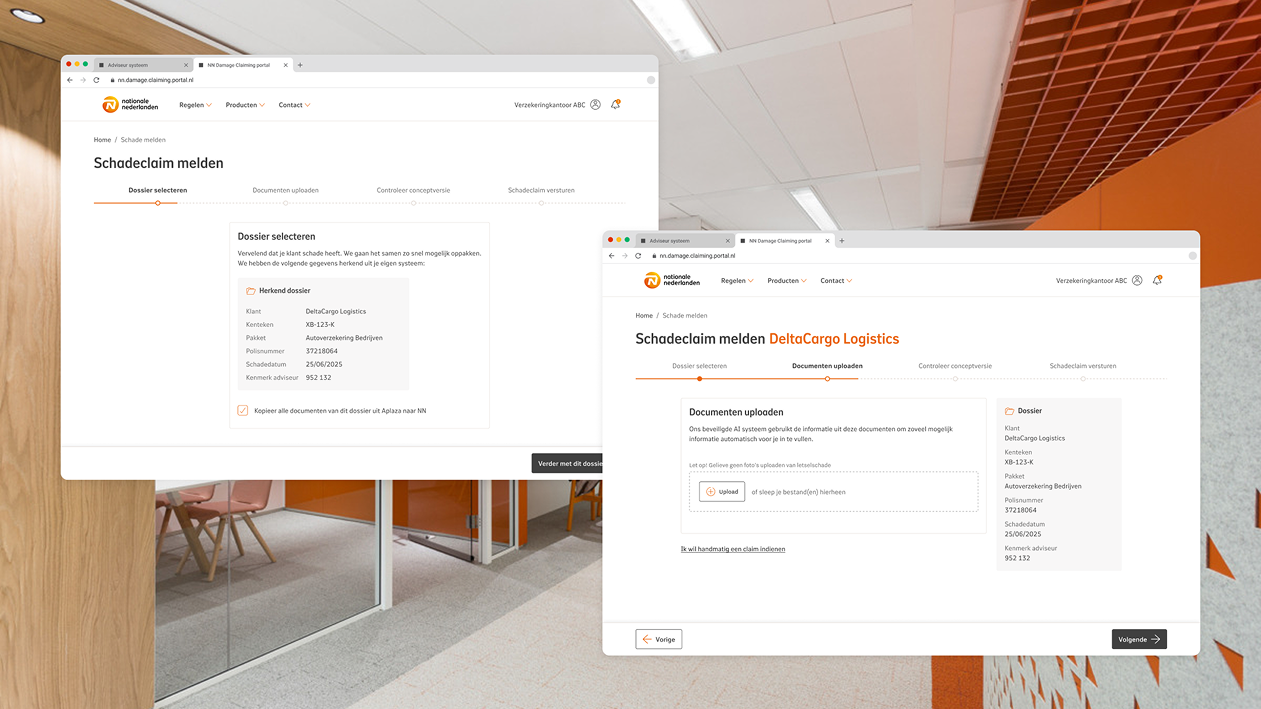
A redesigned claims flow that makes claim handling faster, simpler, and more customer-centric.
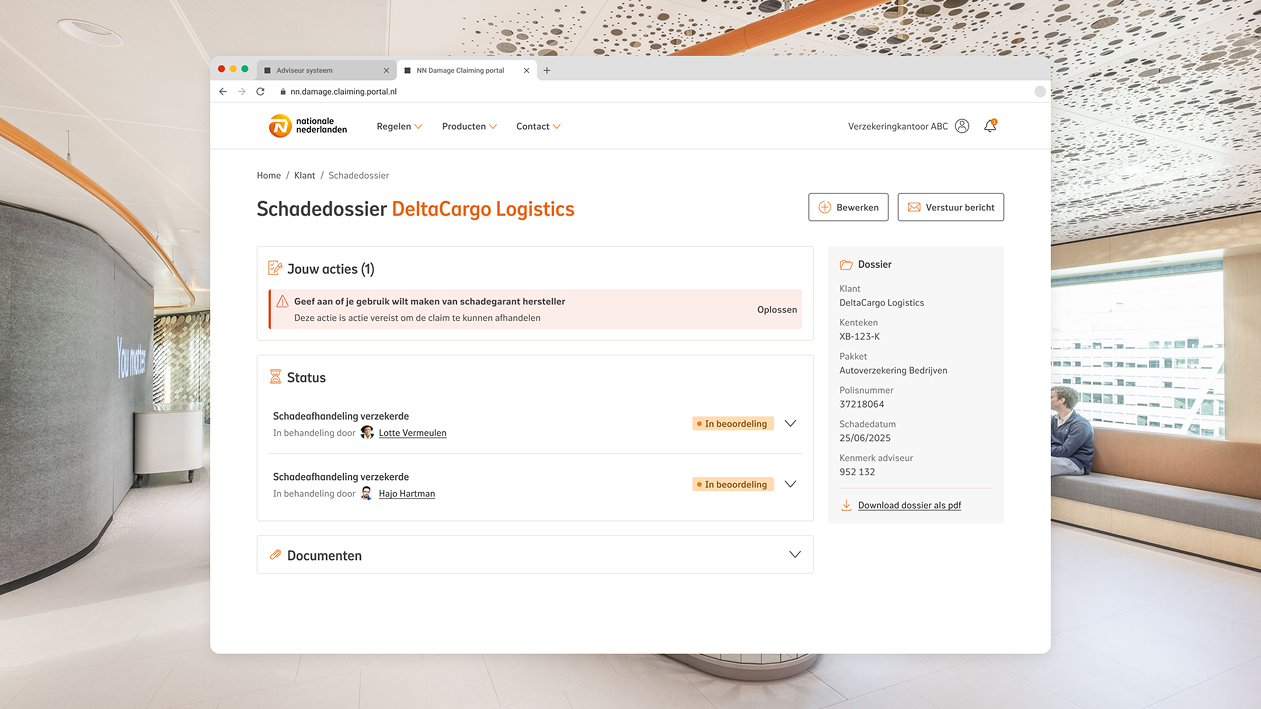
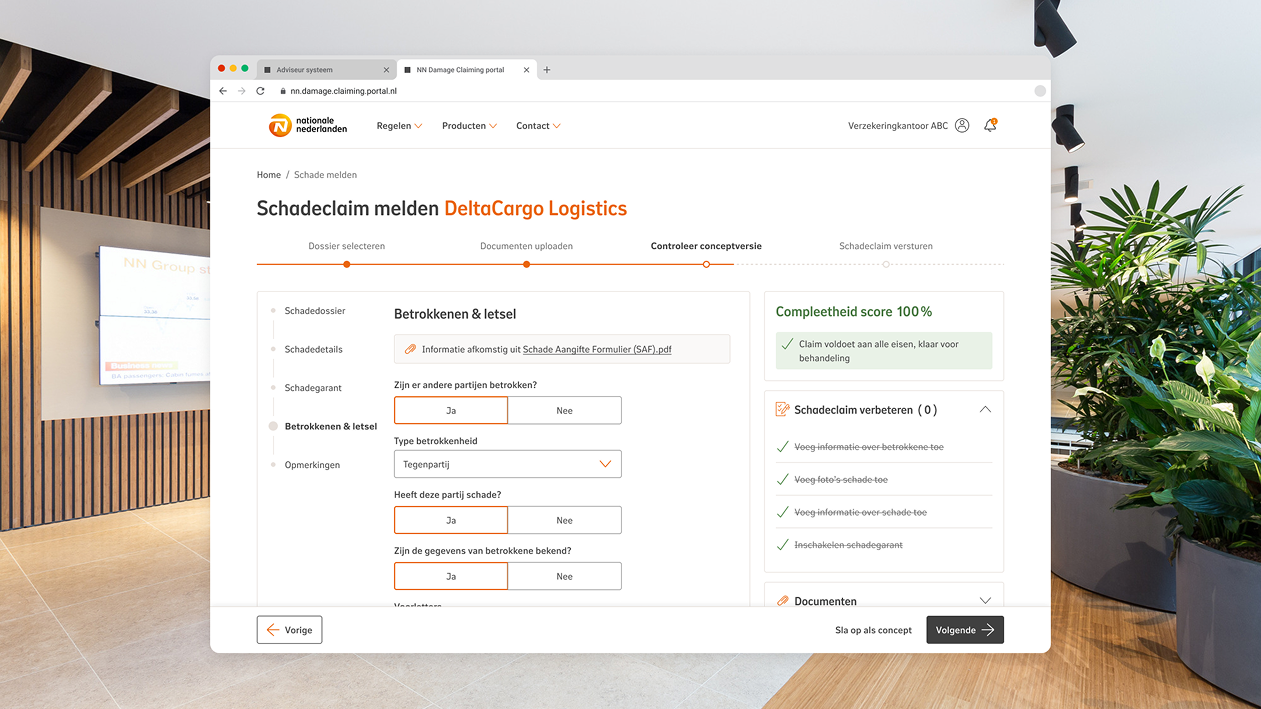
By using AI and smart integrations, Nationale-Nederlanden and advisors save a significant amount of time. AI models automatically extract relevant claim data from uploaded documents, eliminating the need for manual data entry. A completeness score shows how well a claim has been filled in and encourages improvement. The higher the score, the faster the claim can be processed. Missing information is automatically translated into clear, actionable tasks that can easily be checked off. These actions are visible in the claim file for both Nationale-Nederlanden and the advisor. This shared overview ensures transparency, keeps everyone aligned, and helps both parties support the customer as effectively as possible.
Design Sprint: Kickstarting and shaping innovative ideas.
The process started with interviews with stakeholders and advisors. The insights from these conversations formed the basis for a two-day Design Sprint, where we collaboratively explored innovative solutions. During this intensive sprint, multiple stakeholders worked together with a single shared goal: designing a smarter, more user-friendly claims process supported by AI.
Result, An interactive prototype, validated with users.
Based on the initial concepts, we developed an interactive prototype and tested it with advisors from daily practice. Their feedback helped us refine and validate the concept. We presented the results to stakeholders, after which the designs were further developed in Figma into a user-friendly and future-proof portal. The portal is currently in development, with the first version expected to go live in early 2026.